
Why Does My Drain Keep Clogging? What Professional Drain Cleaning Actually Does

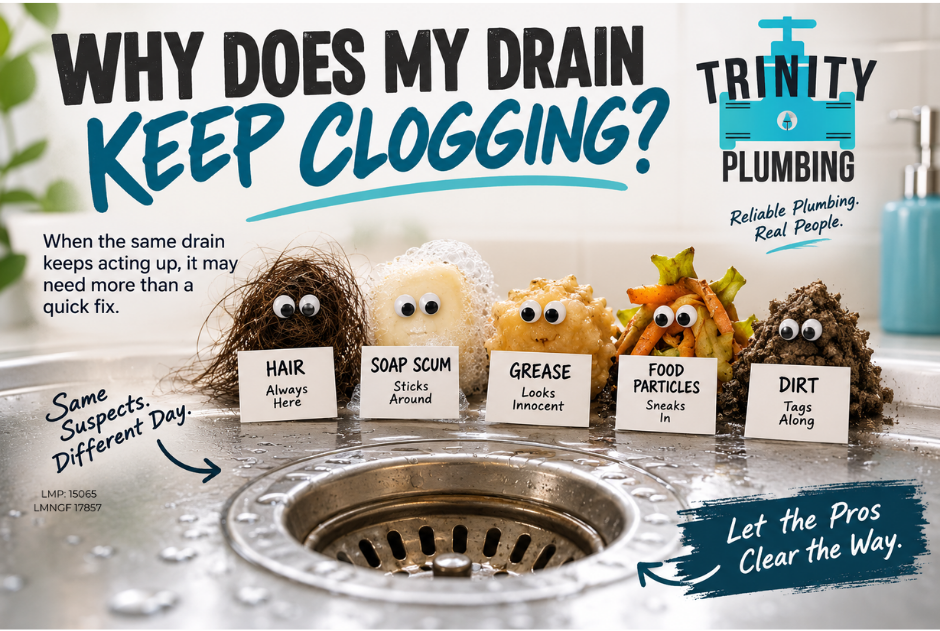
A clogged drain is frustrating. A drain that keeps clogging is trying to tell you something.
Maybe the kitchen sink starts draining slowly every few weeks. Maybe the shower fills around your feet before the water finally disappears. Or maybe you clear a clog, celebrate the victory, and then find yourself dealing with the exact same problem again a few days later.
When a drain keeps slowing down or clogging, the problem may be more than whatever is sitting near the drain opening.
Professional drain cleaning is designed to do more than simply get the water moving again. It can help clear buildup inside the pipe and determine why the same drain keeps giving you trouble.
Why Does My Drain Keep Clogging?
Most household drain problems develop gradually.
Over time, materials collect along the inside of the pipe and make the opening smaller. Water still drains at first, just a little more slowly. As more buildup accumulates, it becomes easier for additional debris to get caught.
Eventually, you have a clog.
Kitchen Drains
Kitchen drains have to deal with a lot more than water.
Grease
Cooking oils
Food particles
Soap residue
and other debris can collect inside the drainpipe over time.
One common misconception is that running hot water will keep grease from causing problems. Hot water may keep grease liquid temporarily, but as it moves farther through the plumbing and cools, it can begin sticking to the inside of the pipe.
Once that sticky layer forms, other particles can attach to it and the buildup continues.
Bathroom Drains
Bathroom sinks, tubs, and showers have a different cast of characters.
Hair, soap residue, shaving products, toothpaste, skin oils, and personal-care products can gradually accumulate inside the drain.
You may notice the water draining just a little slower at first. That gradual slowdown is often one of the earliest signs that buildup is developing.
Why Does My Drain Clog Again After I Clear It?
Because clearing a clog and cleaning a drain are not always the same thing.
Sometimes a plunger or other DIY method opens enough space for water to start flowing again, but some of the buildup remains along the inside of the pipe.
For a while, everything seems fine.
Then more debris catches on the remaining buildup and the drain begins slowing down again.
That is why a drain that repeatedly clogs deserves a closer look. The goal is not just to create a temporary opening. It is to address what is causing the restriction in the first place.
How Do I Know When I Need Professional Drain Cleaning?
One slow drain doesn't automatically mean you need to call a plumber.
But certain patterns are worth paying attention to.
You may want to have the drain checked if:
The same drain keeps clogging.
Water drains slowly even after you clear the visible blockage.
A sink, tub, or shower is getting progressively slower.
You regularly need to plunge the same fixture.
DIY drain-clearing methods only work temporarily.
You aren't sure what is causing the problem.
Recurring drain problems are usually easier to deal with before the drain becomes completely blocked.
What Happens During Professional Drain Cleaning?
Professional drain cleaning begins with figuring out what is actually happening.
A plumber may ask how long the drain has been slow, whether the problem has happened before, and whether anything has recently changed.
From there, the plumber can determine the best way to address the blockage or buildup.
Depending on the situation, professional drain-cleaning equipment can be used to break through or remove the material restricting the pipe.
The drain is then checked to make sure water is flowing properly again.
The important difference is that the plumber isn't simply trying to make the water disappear from the sink. The goal is to understand the cause of the problem and restore proper drainage.
When Is a Camera Inspection Used?
Sometimes the reason for a recurring drain problem isn't obvious.
A video pipe inspection allows a plumber to see what is happening inside the pipe rather than relying entirely on guesswork.
A small camera is sent through the plumbing line so the plumber can look for buildup, obstructions, damage, or other conditions that may be contributing to the problem. Not every slow drain needs a camera inspection. But when a problem keeps returning or the cause isn't clear, being able to actually see inside the pipe can provide valuable information.
Will Professional Drain Cleaning Damage My Pipes?
Professional drain cleaning should be matched to the condition of the plumbing and the type of blockage.
That is one advantage of having a plumber evaluate the problem before deciding how to clear it.
Older plumbing, unusual pipe materials, recurring clogs, or other conditions may require a different approach than a straightforward household drain blockage.
The goal is to clear the drain while protecting the plumbing system.
How Often Should Drains Be Professionally Cleaned?
There isn't one schedule that works for every home.
Some households may rarely experience drain problems. Others may have a kitchen or bathroom drain that tends to accumulate buildup more quickly.
Instead of putting drain cleaning on an arbitrary calendar, pay attention to how your plumbing is behaving.
If a drain is flowing normally and isn't repeatedly clogging, professional cleaning may not be necessary.
If the same drain keeps slowing down, clogging, or requiring attention, that pattern is a better indication that it's time to have it checked.
Can I Prevent Drain Buildup?
You can't prevent every clog, but you can reduce what goes into your drains.
Avoid pouring grease or cooking oil down the kitchen sink. Keep food scraps out of the drain whenever possible, and use drain screens or strainers to catch hair and larger debris in bathroom drains.
And pay attention when a drain starts slowing down.
A sluggish drain is much easier to address than a sink or shower that has stopped draining completely.
Stop Fixing the Same Clog Over and Over
If you clear a drain once and the problem disappears, great!
But if the same drain keeps clogging, slowing down, or requiring another round with the plunger, there may be buildup or another restriction that needs more than a temporary fix.
Professional drain cleaning can help determine what is causing the problem, clear the restriction, and get your plumbing flowing properly again.
If you have a stubborn or recurring drain problem, contact Trinity Plumbing to have it checked before that slow drain becomes a bigger headache.
FAQ's
Why does my drain keep clogging even after I clear it?
If a drain keeps clogging, the original blockage may only be partially cleared. Grease, soap residue, hair, food particles, and other buildup can remain along the inside of the pipe, allowing new debris to collect quickly. Professional drain cleaning can remove more of that buildup instead of simply opening a temporary path for water.
How do I know if my drain needs professional cleaning?
A drain may need professional cleaning if it repeatedly clogs, drains slowly even after you clear it, or gets progressively slower over time. Needing to plunge or clear the same drain again and again is also a good sign that the underlying buildup should be addressed.
Why does my kitchen sink keep clogging?
Kitchen drains commonly clog because of grease, cooking oils, food particles, and soap residue. These materials can stick to the inside of the pipe and gradually narrow the opening until water can no longer flow normally.
Can grease clog a drain even if I run hot water?
Yes. Hot water may keep grease liquid while it is near the sink, but the grease can cool and harden farther down the plumbing line. Once it begins sticking to the pipe, food particles and other debris can attach to it and create a larger blockage.
Why is my shower drain getting slower?
Hair, soap residue, skin oils, and personal-care products can gradually build up inside a shower or tub drain. A drain that becomes slower over time is often an early sign that buildup is restricting the flow of water.
What does a plumber do during professional drain cleaning?
A plumber first evaluates the drain and the symptoms you are experiencing. Professional drain-cleaning equipment can then be used to break through or remove the material restricting the pipe. Afterward, the drain is checked to make sure water is flowing properly.
When would a plumber use a camera to inspect a drain?
A video inspection may be recommended when a drain problem keeps returning or the cause of the blockage is unclear. The camera allows the plumber to see inside the pipe and identify buildup, obstructions, damage, or other conditions that may be contributing to the problem.
Can professional drain cleaning damage my pipes?
Professional drain cleaning should be chosen based on the type and condition of the plumbing. A plumber can evaluate the pipe before selecting the appropriate method, which is especially important with older plumbing or recurring drain problems.
How often should I have my drains professionally cleaned?
There is no single schedule that applies to every home. If your drains are flowing normally and rarely clog, routine professional cleaning may not be necessary. Recurring clogs, slow drainage, or repeated buildup are better signs that it is time to have a drain professionally evaluated.
Is a slow drain always a sign of a clog?
Not necessarily, but a drain that becomes progressively slower usually deserves attention. Buildup inside the pipe can restrict water flow long before the drain becomes completely blocked.


Comments